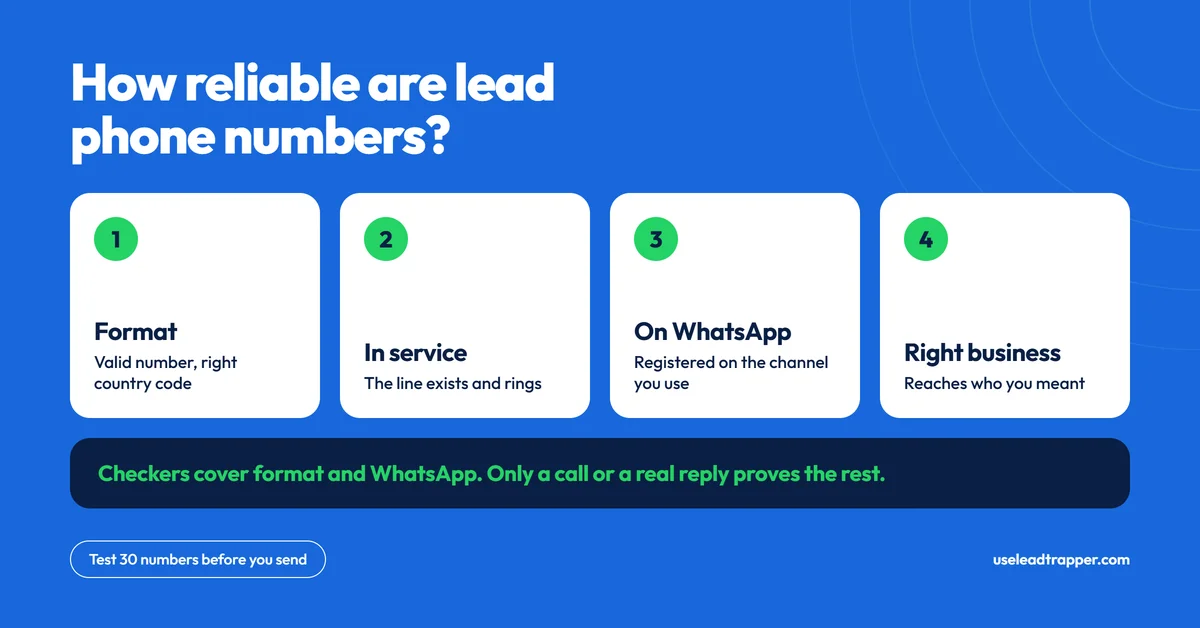
- No lead source has a phone accuracy you can trust without testing. Vendor accuracy figures can't be checked from outside, so measure your own list.
- A number can fail four different ways: wrong format, not in service, not on the channel you use, or not reaching the right business.
- Google Maps numbers are published by the business and are usually its main line, but many are landlines that can't be on WhatsApp.
- A 30-number sample tested before a campaign shows the failure rate of your list in an afternoon, and that of each source if you compare them.
- LeadTrapper's Number Filter checks WhatsApp registration and reports business or personal accounts. It doesn't check that a number reaches the right person.
Vendors love to quote a phone accuracy percentage. None of those figures can be checked from outside, and none of them describe your list. The question that matters is how reliable the numbers are for your niche and country, and you can answer that yourself in an afternoon. This guide explains where lead-tool phone numbers come from, why they fail, and how to test a sample before you spend a campaign on them.
What Reliable Actually Means
A phone number can be wrong in four separate ways, and different tools check different ones.
| Check | Question | Who can check it |
|---|---|---|
| Format | Is it a valid number with the right country code? | Any cleaning tool |
| In service | Does the line exist and ring? | Only a call or a carrier lookup |
| On your channel | Is it registered on WhatsApp? | A WhatsApp checker |
| Right target | Does it reach the business or person you meant? | Only a real reply |
A list can pass the first three checks and still fail the fourth. That’s why “verified” on a sales page proves less than it sounds like, and why a small manual test is worth doing.
Where Lead Phone Numbers Come From
Compiled databases. Vendors assemble numbers from many places and sell them repeatedly. They can include direct lines that are hard to find elsewhere, but they age between refreshes, and the vendor’s accuracy claim is theirs to make and yours to test. Ask what happens when a number is wrong: whether they refund credits, and how fast.
Google Maps. Numbers come from the business’s own listing, so they’re usually its main line, and active businesses keep them current because customers call. The weak points are landlines that can’t be on WhatsApp, and listings nobody has updated since the business moved or closed. LeadTrapper’s Google Maps scraper reads the number as published, and adds an email or WhatsApp link only when the business shows one on its own website.
Websites and social bios. A number pulled from a website or an Instagram bio is what someone wrote there, sometimes years ago, sometimes a personal mobile.
Person-level tools. Tools built around individual contacts, such as Lusha or Apollo, sell direct dials and mobiles. Coverage and freshness differ by country, so a tool that works well in one market can be thin in another.
Why Numbers Fail
- Format. A missing country code, a leading zero that shouldn’t be there, or a dash and a space in the wrong place. The same number written two ways also counts twice, so a list can look bigger than it is.
- Closed or changed. Businesses close and move, and their listing may lag behind.
- Landlines and switchboards. These can’t receive WhatsApp, and a switchboard reaches a receptionist, not a decision-maker.
- Never on WhatsApp. Many valid numbers were simply never registered.
- Wrong owner. A recycled number may now belong to someone else.
Sending to numbers that aren’t on WhatsApp isn’t only wasted effort. As the guide to invalid numbers and ban risk explains, a high rate of failed sends is one of the signals that can put your sending account at risk.
The 30-Number Test
Test each source on the same terms. A sample is a rough gauge, not a guarantee, but it’s enough to tell a usable source from a poor one.
- Pick 30 numbers at random from your list. Don’t choose the best-looking ones.
- Clean and check them. Run the sample through the WhatsApp Number Filter. It cleans the format, removes duplicates that only looked different, and checks each number against WhatsApp, with a business or personal flag. Count how many are registered.
- Contact the registered ones the way you intend to. A short, honest message from a business line works. Note replies, wrong-number replies and silence.
- Call a handful of the unregistered ones. You’ll find out how many are landlines, how many are dead, and how many are simply not on WhatsApp.
- Write the result down per source. For each source, record the share registered, the share that answered, and the share that reached the right business.
If you built the list yourself from Google Maps, the guide to B2B lead generation lists covers the build and the checks in one place. If a purchased list fails your sample badly, that’s a reason to ask the vendor for credits back before you send anything.
Fixing a List Before You Send
- Remove what the check rejects rather than hoping. The contact list cleaning guide walks through the order: format, duplicates, then registration.
- Split by number type. Business accounts and personal accounts behave differently, and a list of landlines needs a call, not a WhatsApp message.
- Send small first. A first batch of 50 to 100 shows real reply and block behaviour before you commit the whole list. LeadTrapper’s pacing and safety pauses exist for the same reason.
- Mind the rules. Business numbers are one thing. A sole trader’s number is personal data in some countries, and marketing rules can require an opt-out or consent. That applies to bought lists and built ones alike.
The short version: treat any accuracy figure as a claim to test, and let a sample of your own list settle it.
Frequently Asked Questions
It depends on the source and the niche, and no general figure is trustworthy. Vendors publish accuracy claims that can't be checked from outside, and public-listing sources like Google Maps vary with how actively each business keeps its listing up to date. The dependable answer is to test a sample of your own list before a campaign.
There's no universal winner. Google Maps numbers are usually a business's main line, published by the business itself, but many are landlines. Purchased databases can carry direct dials but age between updates. Numbers from social bios are self-reported. Compare the same 30-number sample from each source and let your own results decide.
The common reasons are formatting problems such as a missing country code, businesses that have closed or changed number, landlines and switchboards that can't receive WhatsApp, numbers that were never registered on WhatsApp, and duplicates that look different but are the same number.
Use a number checker that queries WhatsApp itself. LeadTrapper's Number Filter cleans each number's format, checks it against WhatsApp, and reports whether it is registered and whether the account is business or personal. It only tells you the number is on WhatsApp, not that the right person will answer.
Anyone quoting a fixed percentage for all lists is guessing. Rates change by country, industry and how old the data is. A 30-number test gives a rough estimate, and a bigger sample gives a steadier one. Use it to decide whether a source is worth paying for, not as a promise.
Check Your Numbers Before You Send
LeadTrapper's Number Filter cleans and checks every number against WhatsApp, and its Google Maps scraper builds the list. $50/year, all features included.
Related Articles
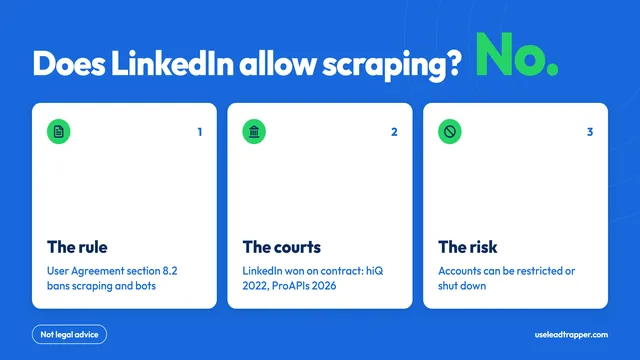
Does LinkedIn Allow Scraping? What Its Rules Say
No: LinkedIn's User Agreement bans scraping and bots. The rules, the court cases, what can happen to…
Read article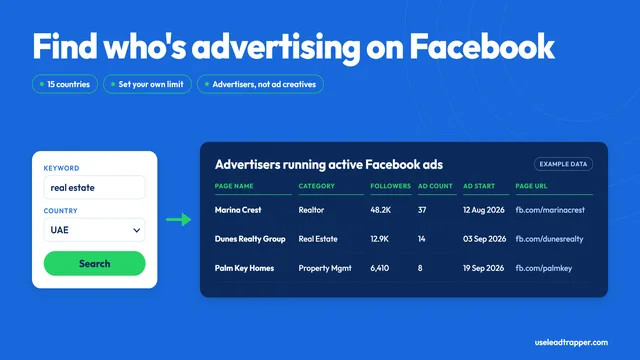
Facebook Ad Library Scraper: Find Advertisers by Keyword
LeadTrapper's Facebook Ad Library scraper lists businesses running active ads for a keyword and coun…
Read articleBrowse All Articles
Lead generation, WhatsApp marketing, Google Maps, Instagram, and Facebook scraping guides.
See all