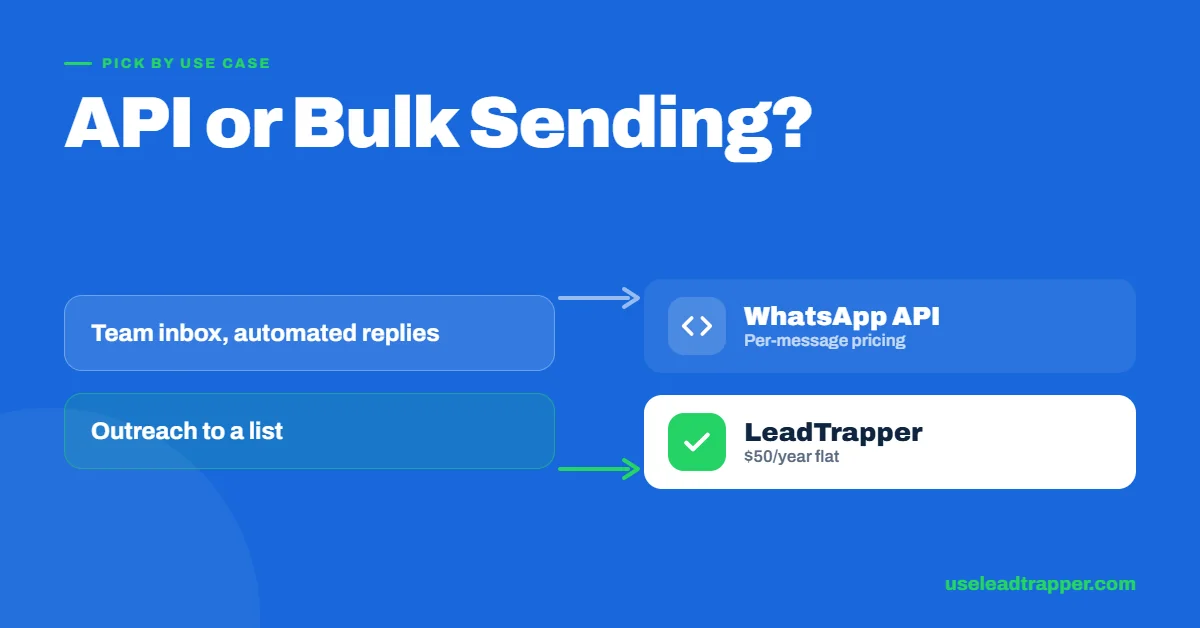
- The API and a bulk sender solve different problems: automated, template-based messaging tied to a customer action, versus outbound campaigns to a contact list.
- A shared team inbox with multiple agents replying from one number is a genuine API strength that bulk sending doesn't replicate.
- Editing an API template requires resubmitting it for Meta's approval. A bulk sender's message can be changed and sent the same minute.
- Real estate agents, online stores, clinics, and solo operators messaging leads or customers directly usually need bulk sending, not the API's approval-and-review workflow.
- The two aren't mutually exclusive — a growing business can use both for what each is actually good at, rather than forcing one tool to do both jobs.
Neither tool is “better” in general — they’re built for different jobs, and most of the confusion between the WhatsApp Business API and a bulk sender comes from comparing them as if one is simply a cheaper version of the other. They’re not. One is designed around an ongoing, approved relationship with existing or returning contacts; the other is designed around reaching a list once, personally, without a review process standing between writing a message and sending it. Confusing the two leads to the same recurring mistake — either paying for API infrastructure a solo operator will never fully use, or trying to force a shared support inbox through a tool that was never built to have more than one person behind it. Here’s how to tell which one actually fits.
When the API Is Actually the Right Tool
The API earns its complexity in a specific situation: a team of multiple agents needs to see and reply to the same WhatsApp number from a shared inbox, and messaging is tied to real customer actions — order confirmations, delivery updates, appointment reminders, support conversations that started because a customer messaged first. Meta’s messaging tier system is built around this pattern: a business earns higher volume by maintaining message quality over time, which fits an ongoing customer-service relationship far better than a one-time campaign.
If the real need is “our support team needs one shared WhatsApp inbox,” the API — through a BSP — is solving the right problem. The messaging tier system that comes with it, starting most verified businesses at 1,000 unique contacts a day and scaling up through demonstrated volume and quality, is built around a relationship that deepens gradually rather than a burst of outreach that needs to reach everyone at once. A support team replying to existing customers day after day is exactly the pattern that earns tier advancement — steady, well-received volume over a rolling window, not a single large push.
When You Just Need Bulk Sending
If the actual need is “reach a list of leads or contacts with a campaign,” that’s a different job entirely — outbound messaging to people who haven’t necessarily messaged first, which is exactly what the API’s opt-in and template-approval rules are built to restrict for marketing use. A bulk sender like LeadTrapper is built specifically for this: write a message, personalize it per contact, send it, done — no review queue, no waiting on Meta’s approval to change the wording.
The Differences That Should Actually Decide It
| WhatsApp Business API | Bulk Sender (LeadTrapper) |
| Message wording needs Meta's approval to change | Edit and send the same minute |
| Built for shared, multi-agent inboxes | Built for one person or team running a campaign |
| Requires proven opt-in for marketing messages | No opt-in policy gate — real ban risk still applies |
| Per-message billing, scales with volume | Flat $50/year regardless of volume |
By Who's Asking
Real estate brokers contacting property leads from a scraped or purchased list run into the opt-in requirement immediately — none of that data comes with the contact having taken an action that names the business and the message type, which is exactly what Meta’s policy requires before a marketing template can send. Bulk sending doesn’t have that structural gate, which is why it’s the practical fit here, not just the cheaper one. The tradeoff is that the underlying WhatsApp ban-risk considerations still apply, so list quality and pacing matter regardless of which tool sends the message.
Online stores usually have two genuinely different jobs that get conflated into one decision. Sending a promotional blast to the existing customer list for a sale or new product launch is outreach — bulk sending territory. Automating order confirmations, shipping updates, and delivery notifications tied to an actual purchase is a transactional, ongoing job that fits the API’s utility-message category well, especially once a support team needs to see and reply to customer questions from a shared inbox. A growing store often ends up wanting both, for different reasons.
Clinics split similarly. A one-off campaign — reminding a patient list about a seasonal offer or a new service — is bulk sending. An automated, always-on part of a booking system that sends appointment reminders the moment a slot is confirmed, with front-desk staff replying to patient questions from a shared number, is closer to what the API is built for. The deciding factor isn’t the clinic’s size, it’s whether the messaging is tied to a live booking system or run as a periodic campaign.
Small and medium businesses reaching out to leads or existing customers directly are almost always better served by bulk sending. The overhead of business verification, template submission and review, and a monthly BSP subscription rarely pays for itself at this scale, especially when the actual need is “send this campaign this week,” not “maintain an approved message library indefinitely.”
Individuals — solo consultants, freelancers, single-agent operations — have no team inbox to staff, which removes the API’s single strongest justification entirely. Bulk sending covers the actual need: write a message, send it to a list, reply personally to whoever responds.
Using Both at Once
These aren’t mutually exclusive tools competing for the same job. A business that both runs outbound lead campaigns and needs automated, always-on customer service can use a bulk sender for the former and the API for the latter — each handling the part it’s actually built for, rather than one tool being stretched to cover both and doing neither particularly well. The API’s template rigidity is a real cost when applied to fast-moving outreach; a bulk sender’s lack of a shared team inbox is a real cost when applied to ongoing multi-agent support. Matching the tool to the specific job avoids paying both costs at once.
If cost is the deciding factor, see what the API really costs in 2026. If it’s about who you can legally message, see why the API blocks cold outreach. And if volume ceilings matter to your decision, see how the API’s messaging tiers work.
Frequently Asked Questions
Usually not, if the goal is outbound campaigns — announcing offers, following up with leads, reaching a contact list. The API is built for automated, template-approved messaging at scale, often for teams handling live customer conversations across multiple agents. A solo operator or small team running campaigns is typically better served by a bulk sender.
Yes, and this is one of the clearest bulk-sending use cases — contacting landlords or buyers from a scraped or purchased list doesn't meet the API's opt-in requirement for marketing templates, but it's exactly what a bulk sender is built to handle, with the same underlying WhatsApp ban-risk considerations that apply to any outreach.
A transactional (utility) message is tied to an existing action a customer already took — an order confirmation, a delivery update, an appointment reminder. A marketing message is business-initiated outreach to start or continue a sales conversation. The API's opt-in and template rules are strictest for marketing messages; utility messages tied to a real transaction have narrower, easier requirements.
Yes. Some businesses use the API for automated order updates or a shared support inbox, and a separate bulk sender for outbound lead campaigns. They solve different problems well; using one tool to force both jobs usually means paying for capability you don't use on one side or fighting template restrictions on the other.
If It's Outreach, Not Support, This Is Built for It
LeadTrapper sends personalized bulk campaigns from a connected WhatsApp account — no templates to approve, no team-inbox overhead you don't need. $50/year.
Related Articles
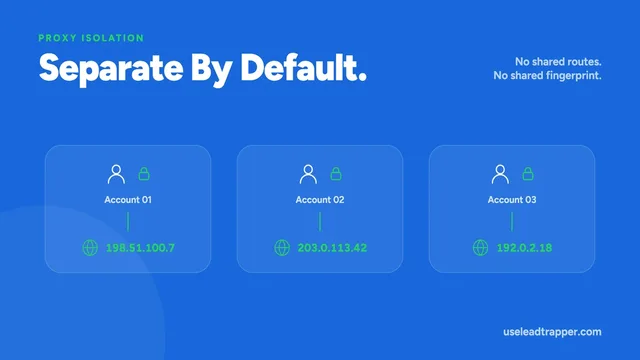
Running Multiple WhatsApp Numbers Without Overlap
Each WhatsApp account in LeadTrapper gets its own isolated browser session and proxy, so multiple nu…
Read article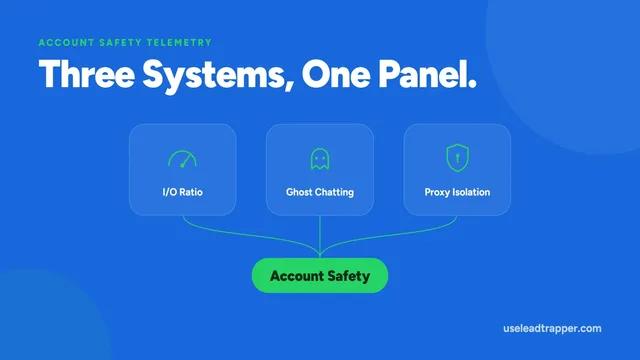
WhatsApp Account Safety Telemetry: What It Actually Does
LeadTrapper tracks outbound-to-inbound ratio, simulates browsing between sends, and isolates each ac…
Read articleBrowse All Articles
Lead generation, WhatsApp marketing, Google Maps, Instagram, and Facebook scraping guides.
See all