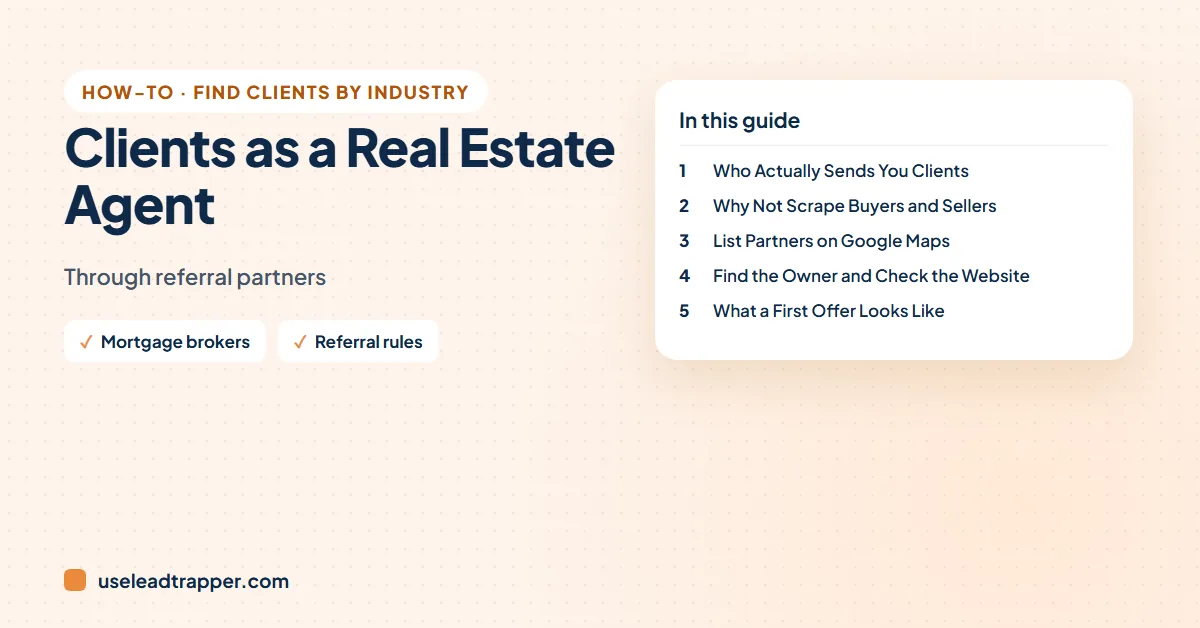
In this article 7 sections
Real estate agents find steady clients through referral partners who meet buyers and sellers first: mortgage brokers, builders, relocation firms, HR teams, estate lawyers and property managers. List them on Google Maps by city, contact the owner, and offer a clear way to send each other work, within local referral-fee rules.
- Home buyers and sellers are private people. Build a partner list of businesses instead: mortgage brokers, builders, relocation firms, HR teams, estate lawyers and property managers all meet buyers and sellers before you do.
- Google Maps lists nearly every one of those partners by city, with phone, website and review count. Search one partner type at a time and keep the list in a spreadsheet.
- In the US, paying or accepting a fee for a referral between agents and mortgage or title businesses is restricted by RESPA Section 8. Referral partnerships should run on trust and shared events, not payments.
- Calls to businesses are mostly outside the US Do Not Call rules, but calls to individuals are covered. In the UK, screen against both the TPS and the Corporate TPS.
- A partner who sends one client a quarter is worth more than a hundred cold messages. Visit, meet and help them first.
Most agents have the same problem: plenty of enquiries on portals, not enough steady, high-quality clients. The deals that arrive without advertising usually come through other businesses that meet buyers and sellers first. This guide shows how to find and approach them. We make LeadTrapper, which helps with the listing steps, and we say so where it appears. It does not find buyers and sellers for you, and we explain why below.
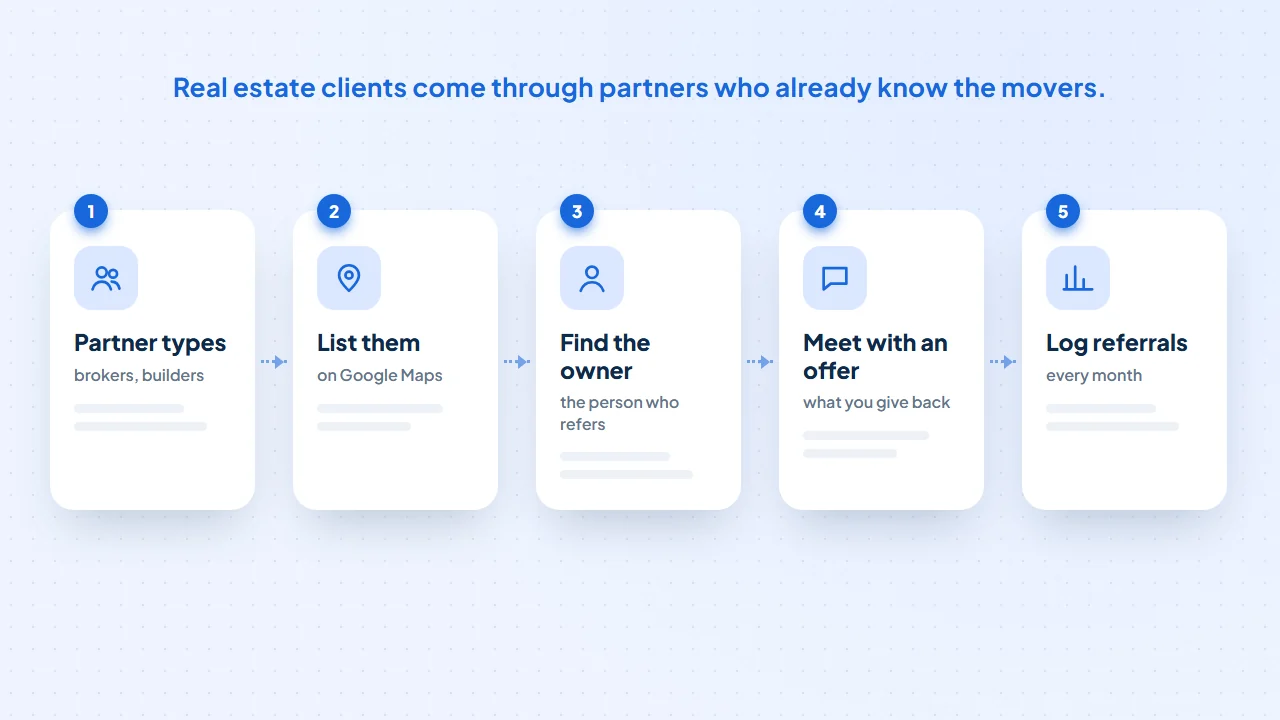
Who Actually Sends You Clients
The businesses that send agents clients are the ones a buyer or seller talks to before choosing an agent: lenders, builders, employers, lawyers and landlords. Each one has its own buying trigger and its own kind of client.
| Partner | Who they meet | Trigger that makes them need an agent | Where to list them |
|---|---|---|---|
| Mortgage brokers | Buyers asking “how much can I borrow?” | A buyer is pre-approved and needs a property | Google Maps: “mortgage broker” + city |
| Builders and developers | New-build buyers; investors | A new phase or show home launches | Google Maps: “home builder”, “property developer”; council planning lists |
| Relocation firms | Employees moving to the city | A company moves staff or opens an office | Google Maps: “relocation service”; LinkedIn |
| HR teams hiring from abroad | New hires who need housing | Visa approved, start date set | LinkedIn: “HR Manager” + city; company careers pages |
| Estate and conveyancing lawyers | Sellers after a death, divorce or move | A probate or divorce sale | Google Maps: “estate lawyer”, “conveyancing solicitor” |
| Property managers and landlords | Owners who may sell, tenants who may buy | A lease ends or a portfolio is trimmed | Google Maps: “property management company” |
Pick two partner types to start. Real estate marketing blogs such as Luxury Presence, NowBAM and AgentFire (all vendors or coaching firms) add other local businesses to this list, including home inspectors, movers, insurance brokers, interior designers and trades. Treat those as second-tier partners. The six above meet people at the moment they are choosing an agent.
Why Not Scrape Buyers and Sellers
Buyers and sellers are private individuals, so do not build your pipeline by scraping them. A person’s phone number is personal data, and contacting people without permission is regulated: in the US, the FTC’s Do Not Call Q&A for telemarketers says fines can reach $53,088 per violation (page edited January 2025), and each call can count separately. Texting consumers has its own consent rules under the US TCPA; the FCC’s fact sheet on illegal text messages (November 2023) explains them.
LeadTrapper is built to list businesses and collect the contact details they publish themselves. We do not offer a feature to harvest private people, and we advise against using any tool that way. If you already have buyers who asked to hear from you, our guide on WhatsApp marketing for real estate covers sending them matching listings, so we do not repeat that here.
List Partners on Google Maps
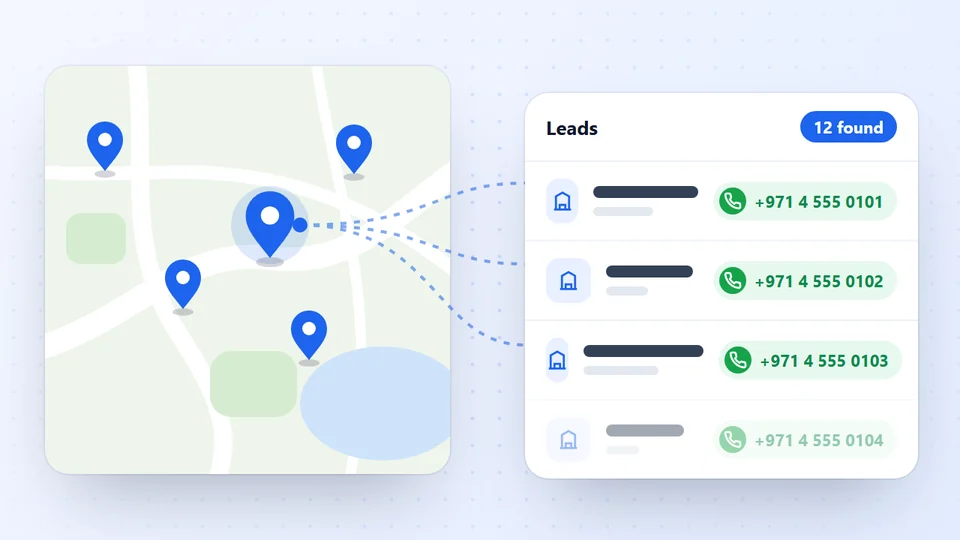
Google Maps shows nearly every local business of a type with its phone, website, rating and review count, so one search per partner type gives you a complete first list. One Maps search stops at about 120 places, so a large city needs several searches by district.
LeadTrapper’s Google Maps scraper on Windows takes a keyword and a location (for example “mortgage broker” and “Manchester”). It then searches the location area by area and keeps going until no new businesses appear, so you are not capped at 120. You can set an optional “Stop after” number, and you export the list as CSV. Our guide on getting more than 120 Google Maps results explains the limit.
A worked example (illustrative numbers). Say you are an agent in Manchester and you search “mortgage broker” in Manchester. Suppose the scan lists 140 brokers. You sort by review count, keep the 30 with 50 or more reviews because those are active, and mark the 8 with a branch in your postcode areas. You do the same for “home builder” and “relocation service”. In an afternoon you have around 60 named partners, each with a phone and a website, ready to rank. These figures are an example, not a measured result; run your own search to see yours.
For a measured result on real estate businesses themselves, our Google Maps scan results tested real estate agencies in Dubai: 97% listed a website and 47% an email, which shows how much more reachable a typical local business is through its website than through Maps alone.
Build your partner list free for 14 days
Find the Owner and Check the Website
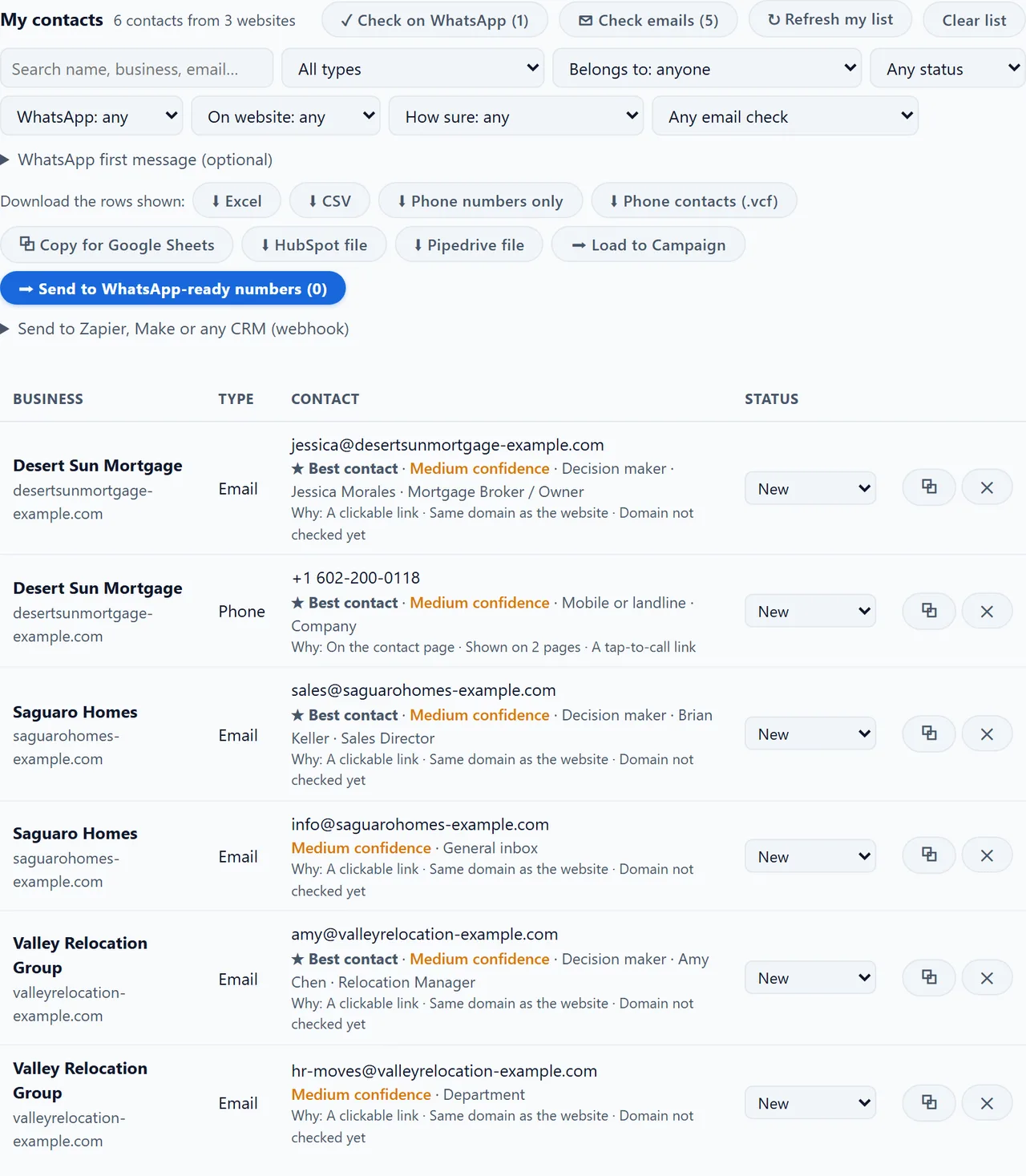
For a small broker or builder the person who decides is usually the owner or a named director, and that name is often on the website’s about or team page. LeadTrapper’s Email Finder reads a business’s home, contact, team and branch pages and saves the emails, phone and WhatsApp numbers it publishes. It labels each email as a general inbox, department, team member or branch, and has a filter for decision makers (owner, director). It only collects what the business itself shows, and it cannot find an address a business has not published. Our guide on finding the decision makers in a company shows the method.
For HR managers at companies that hire from abroad, the LinkedIn scraper builds a list of profiles from a keyword (job title, industry or company), an optional title filter such as Manager or Director, and a city, with name, headline and location. It collects no emails or phone numbers, and LinkedIn’s rules ban scraping, so the risk is yours; read whether LinkedIn allows scraping first. Use the profile to learn who to ask for, then reach the company through its own website or switchboard.
Before you contact anyone, visit the partner’s website and write one line about what they do. A message that mentions their last new-build release or their lender panel gets read.
What a First Offer Looks Like
A first offer to a partner is a specific, low-effort way to help them, not a request for referrals. Offer something that costs you little and helps their clients:
- To a mortgage broker: a monthly one-page summary of local sold prices and what buyers with a given budget can get, and a promise to introduce pre-approved buyers to them first.
- To a builder or developer: a buyer database check for their next phase, or help staffing a show-home weekend, with no fee unless a sale completes through your brokerage in the normal way.
- To a relocation firm or HR team: a one-page neighbourhood guide for new arrivals, with school and commute information, plus a fast-response contact for their staff.
- To an estate lawyer: a free, no-obligation market appraisal for any property in an estate, and clear communication with heirs.
- To a property manager: a market rent and sale value check on their landlords’ properties.
A short first message might read:
Hi Sarah, I’m a sales agent covering south Manchester and I send a monthly sold-price summary to a few local brokers. I’d like to add you. If it’s useful, could we meet for coffee this month so I can learn what your clients ask about most? If you’d rather not hear from me, tell me and I won’t contact you again.
Keep the second contact in person or by phone. Referrals build through repeated, useful contact; one message rarely does it.
Referral Fees and Calling Rules
In the US, you cannot pay or take a fee for referrals to mortgage or title businesses, and most calls to businesses are outside the Do Not Call rules, but calls to individuals are covered.
- Referral fees (US). The CFPB’s Regulation X section 1024.14 says no person shall give or accept “any fee, kickback or other thing of value” under an agreement that settlement service business will be referred. It exempts cooperative brokerage payments between real estate agents and brokers, and “normal promotional and educational activities that are not conditioned on the referral of business”. In practice, shared coffee, joint events and education are fine; a payment per referral is not. Other countries have different rules; check yours.
- Calling a business (US). The FTC’s Do Not Call Q&A says most calls to a business to solicit sales from that business are exempt. A small broker’s mobile may be a personal number, so call the business line shown on its website.
- Calling a business (UK). The ICO’s telephone marketing guidance says to screen business-to-business lists against both the TPS (for individuals, sole traders and some partnerships) and the Corporate TPS.
- Email. Our guide on whether email scraping is legal sets out the rules by country. This is not legal advice.
A Monthly Routine
Partner marketing works as a habit. Here is a routine one agent can keep:
- Week 1: add 10 new partners to the list from Maps; refresh the review counts of your top 30.
- Week 2: send five short, personal messages, each with one useful fact about the partner or their market.
- Week 3: meet two or three partners in person, a coffee or a site visit.
- Week 4: log every referral given and received; thank partners who sent business; drop partners who never reply after three contacts.
Agents who also sell to local service businesses can use the same method; our guide on finding clients for a commercial cleaning business shows the buying-trigger approach applied to offices and clinics, and our B2B leads in the USA and B2B leads in the UK guides cover where businesses publish their contacts.
Where LeadTrapper Finds Leads
LeadTrapper collects leads from each of these sources in one Windows app, then checks the numbers and sends the WhatsApp messages from the same place.
- Google Maps Scraper: Business leads from any city.
- Facebook Scraper: Advertisers, pages and group members.
- Instagram Scraper: Leads from profiles and hashtags.
- TikTok Scraper: Creators, hashtags and commenters.
- LinkedIn Scraper: Profiles by role and city.
- Email Finder: Emails from business websites.
Frequently Asked Questions
Start with your own circle, then build a list of 30 local referral partners: mortgage brokers, new-build developers, relocation firms, property managers and estate lawyers. Meet five a month in person, share useful local market facts, and agree how you will pass clients to each other. Referrals take months, so keep a log of each contact.
We do not recommend it and this guide does not teach it. Buyers and sellers are private individuals, and calling or texting them is covered by consumer rules such as the US Do Not Call Registry and the UK TPS. LeadTrapper is built for finding businesses and the contact details they publish, which is why this guide targets referral partners.
On Google Maps (search mortgage broker, home builder, relocation service or property management company plus your city), in local chamber of commerce and business networking groups, at developer launch events, and in the agent directories of lenders and builders. Maps gives you a complete local list with phone and website in a few minutes.
In the US, usually not. The CFPB's Regulation X rule under RESPA Section 8 bars giving or accepting any fee, kickback or thing of value for referring settlement service business on federally related mortgage loans. Rules differ by country and state, so check with your broker or a lawyer first. This is not legal advice.
In the US, most calls to a business are exempt from the Do Not Call provisions, according to the FTC, while calls to a person's personal number are not. In the UK, you must screen B2B lists against both the TPS and the Corporate TPS. Rules vary by country, so check local law.
Yes. Once you have an existing buyer or tenant list with permission, WhatsApp is a fast way to send them matching listings. Our guide on WhatsApp marketing for real estate covers templates, permit rules in Dubai and Saudi Arabia, and reply speed.
About LeadTrapper
LeadTrapper is a Windows app for finding business leads and contacting them on WhatsApp. It collects business contacts from Google Maps, Instagram, Facebook, TikTok, LinkedIn and business websites, checks which numbers are on WhatsApp with its Number Filter, and sends personalised campaigns with automatic delays from one or more WhatsApp accounts. It also has a chatbot, a shared inbox for every account, and Store Orders for online shops. It installs from the Microsoft Store, and the full app is free for 14 days, then $50 a year. Free web tools, browser extensions and a Wix app are listed on the Free Tools page.
Your Partner List, From One Search per Type
The Google Maps scraper, Email Finder and LinkedIn scraper all come with LeadTrapper. $50/year, all features included.