In this article 7 sections
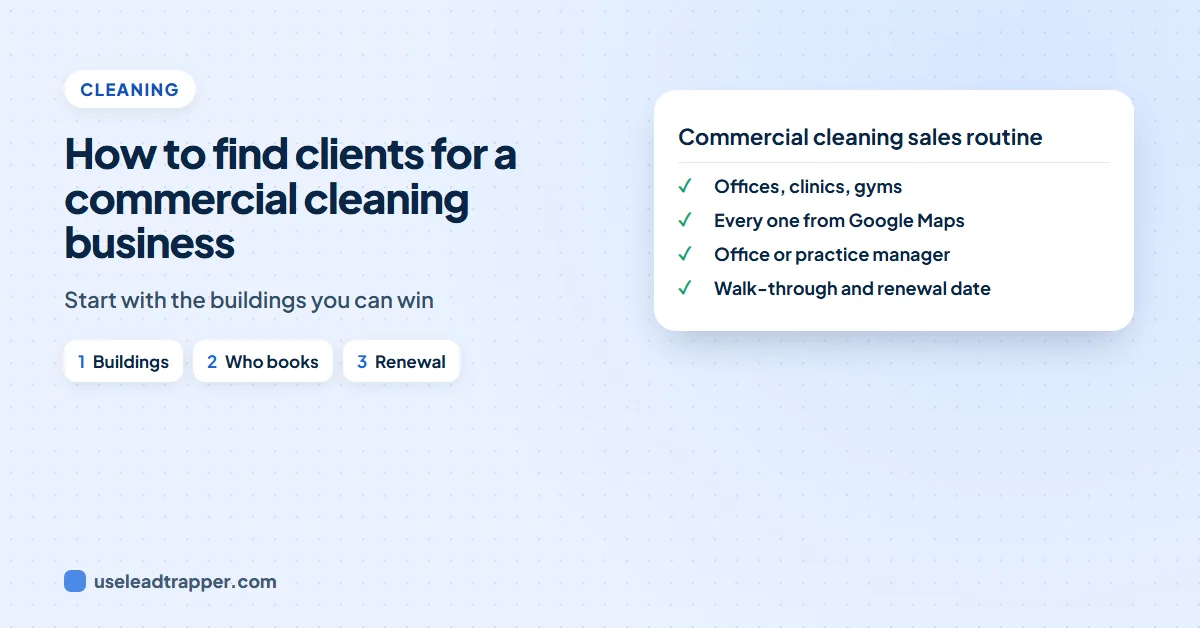
Pick building types that buy regular cleaning, such as offices, clinics, gyms and childcare centres, list every one in your service area from Google Maps, find the office, practice or property manager who books cleaners, and offer a free walk-through. Then track when each contract ends and follow up before renewal.
- Choose building types that need cleaning on a schedule and have one person who books it: offices, medical and dental clinics, gyms, childcare centres, car dealerships and property managers.
- List every one of those businesses in your service area from Google Maps, so your prospect list doesn't depend on who happens to be advertising for a cleaner today.
- The person who books cleaners is rarely the owner of a large firm: it's the office manager, practice manager, facilities manager or the building's property manager.
- Offer a free walk-through and a written quote instead of a price over the phone. Ask when the current contract ends, and diary a follow-up before that date.
- Property managers are worth more than any single tenant, because one manager can hand you several buildings.
Most commercial cleaning companies get their first clients from people they know. Growth stops when that network runs out. Companies that keep growing treat sales like the cleaning itself: a routine, done every week, on a list of buildings they’ve chosen. This guide shows how to build that list, reach the person who books the cleaner, and time your offer so it lands when they’re ready to switch. We make LeadTrapper, which we use in some steps below, and we say so where it appears.
Pick Buildings That Buy Cleaning
The best clients need cleaning on a fixed schedule, care visibly about cleanliness, and have one person who decides. Some types fit better than others:
| Building type | Why they buy | Who usually books |
|---|---|---|
| Offices | Daily or weekly cleaning, kitchens and washrooms | Office or operations manager |
| Medical and dental clinics | Hygiene is part of the service patients judge | Practice manager |
| Gyms and studios | Heavy daily use, reviews mention cleanliness | Owner or club manager |
| Childcare centres and schools | Hygiene rules and parents’ expectations | Centre director or business manager |
| Car dealerships | Showrooms must look perfect every day | General manager |
| Multi-tenant buildings | Lobbies, lifts and common areas | Property or facilities manager |
Pick two or three you can serve well. “We clean dental clinics and offices in North Dallas” is easier to sell than “we clean anything”, and your references from one clinic help you win the next.
List Every One in Your Area
Clients who are searching for a cleaner today are only part of the market. Most buildings already have a cleaner and will switch when the service slips or the contract ends. So list every building of your chosen types, not just the ones advertising.
Use Google Maps. Search the business type and the area, such as “dental clinic Leeds” or “office building Parramatta”. Each listing shows phone, address, website, rating and review count. One search shows about 120 places, so split a city by district or postcode.
LeadTrapper’s Google Maps scraper does this for you on Windows: type the business type and city, and unlimited scan mode splits the city into districts and keeps going until Google Maps shows nothing new, one row per business. Sort the export by address to plan routes, since clients close together make shorter cleaning runs.
Read the reviews of your best prospects. On Google Maps, search a clinic’s or gym’s reviews for words like “dirty”, “bathroom” or “smell”. A business whose customers complain about cleanliness has a problem you solve, and a reason to take your call.
Watch for new businesses. A listing with only a few reviews is often a new site, and a new site needs a cleaner from day one. Rerun your search every quarter and compare it with the last one.
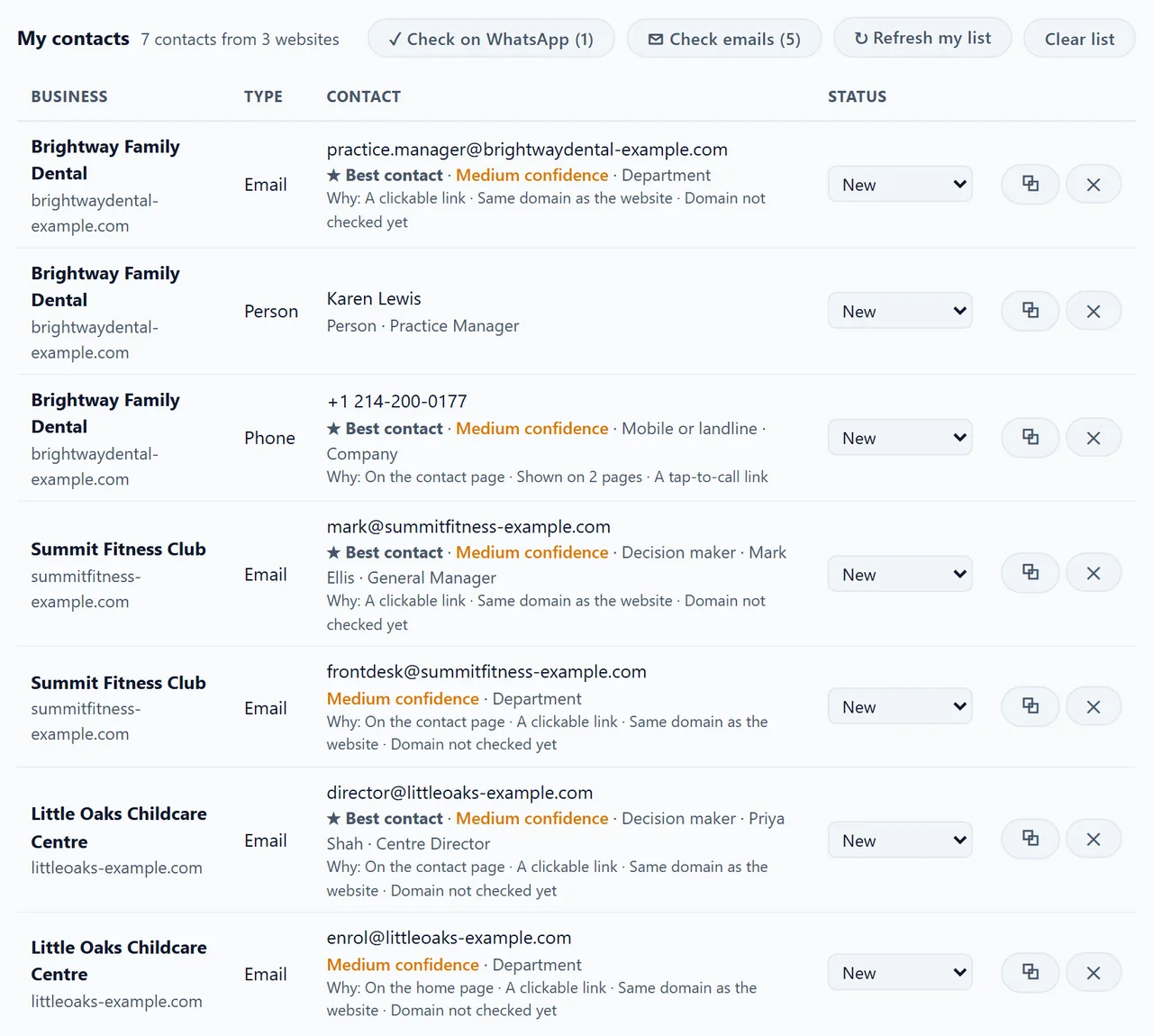
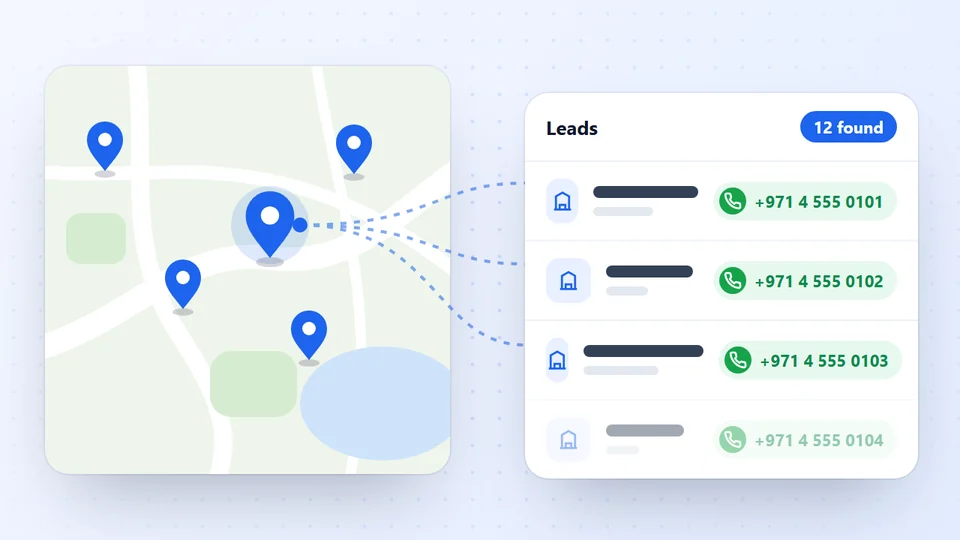
The businesses in this screenshot are samples, shown in the real app screen.
List every office and clinic in your area free for 14 days
Find Who Books the Cleaner
Calling the main number and asking “who handles your cleaning?” works more often than people expect. Before you call, find the name:
- On their website. LeadTrapper's Email Finder reads each business's contact, team, about and branch pages and collects the emails, phone and WhatsApp numbers it publishes. It labels each email as a general inbox, a department, a named team member or a branch, and marks owners and managing directors as decision makers. Clinics often list the practice manager on the team page.
- On LinkedIn. Search "office manager" or "facilities manager" with the city. Our guide to finding the decision makers in a company shows how to match a role to a business.
- For buildings with many tenants. The building's sign, website or Maps listing usually names the property management company. Contact the manager there, not each tenant.
Make an Offer Worth Answering
Every building manager hears from cleaning companies. The messages that get answered are specific to their building and ask for a small step, not a contract:
Hi , I run a cleaning company that looks after three dental practices near you in Headingley. We clean after the last patient and before the first, and our cleaners follow the clinic’s own infection-control checklist. Could I do a free 20-minute walk-through and leave you a written quote? If not, reply STOP and I won’t contact you again.
The `` field is filled in from your list for each message. Then:
- Offer a walk-through, not a price. A quote after seeing the building is more accurate, and the visit lets you meet the decision maker.
- Call after you email. Ask how they’re served now and what they’d change. Most answers fall into missed tasks, staff turnover or communication.
- Use WhatsApp where businesses answer it. In the Gulf, South Asia and much of Africa and Latin America, it’s often faster than email. LeadTrapper’s WhatsApp Number Filter shows which numbers are on WhatsApp, and our guide to WhatsApp B2B outreach covers messaging businesses without getting your number restricted.
- Follow the rules of the country. Our country guides set them out: B2B leads in the USA, the UK, Canada and Australia. In the US, if you also sell cleaning supplies such as paper towels or soap, the FTC treats calls selling those to businesses differently from other B2B calls. This is not legal advice.
Win at Renewal Time
Most businesses don’t switch cleaners mid-contract. They switch when the contract ends, or when something goes wrong. So the most useful question on any first call is: “When does your current contract come up for renewal?”
- Note the date in the same spreadsheet as your list.
- Follow up about two months before it, with your quote updated.
- If they’re happy now, ask if you can be their backup. Cleaners lose staff, and the backup often gets the call.
Over a year, this turns “not now” answers into a calendar of buildings ready to decide.
Tenders and Property Managers
Two sources bring bigger contracts:
Public tenders. Government offices, schools and councils buy cleaning through published tenders: SAM.gov and state procurement sites in the US, Contracts Finder in the UK, CanadaBuys in Canada and AusTender in Australia. Tenders take paperwork, such as insurance, references and method statements, so start with small ones close to you.
Property managers. One property management company can look after dozens of buildings. Search Google Maps for “property management” and “facilities management” in your area, and contact them as a partner: offer to cover vacant units before new tenants move in, end-of-lease cleans and urgent one-off jobs. Do those well, and regular contracts follow.
A Weekly Routine
- Monday: add new businesses from your last Maps search, and check your renewal calendar for the next two months.
- Tuesday to Thursday: contact 10 to 20 buildings, by email or WhatsApp and then by phone, and book walk-throughs.
- Friday: send quotes from the week’s walk-throughs and note every renewal date you learned.
- Each quarter: rerun the Google Maps search for your building types, and check tender sites for cleaning contracts.
Recruitment agencies use the same method with a different buyer, as our guide on how to find clients for a recruitment agency shows, and so do marketing agencies in our guide on how to find clients for a marketing agency.
Where LeadTrapper Finds Leads
LeadTrapper collects leads from each of these sources in one Windows app, then checks the numbers and sends the WhatsApp messages from the same place.
- Google Maps Scraper: Business leads from any city.
- Facebook Scraper: Advertisers, pages and group members.
- Instagram Scraper: Leads from profiles and hashtags.
- TikTok Scraper: Creators, hashtags and commenters.
- LinkedIn Scraper: Profiles by role and city.
- Email Finder: Emails from business websites.
Frequently Asked Questions
Pick two or three building types, list every one in your area from Google Maps, find the office, practice or property manager who books cleaners, and contact them with a short, specific offer of a free walk-through. Then follow up when their current contract is due for renewal.
In a small business, the owner. In a clinic, the practice manager. In an office of 20 or more people, usually the office manager or operations manager. In a multi-tenant building, the property or facilities manager, who often books cleaning for the common areas and sometimes for tenants.
Google Maps lists offices, clinics, gyms and other businesses in your area with phone numbers and websites. Their websites name managers and publish emails. Public tender sites such as SAM.gov in the US, Contracts Finder in the UK, CanadaBuys and AusTender list government cleaning contracts.
Bought leads are usually shared with several cleaning companies, so you compete on price from the first call. A list you build yourself from Google Maps is yours alone, and you can rerun it every quarter to catch new businesses.
Only those a business publishes on its own website. The Email Finder labels each email as a general inbox, a department, a named team member or a branch, and marks owners and managing directors as decision makers. Many small businesses only publish a general inbox, so ask for the right person by phone.
About LeadTrapper
LeadTrapper is a Windows app for finding business leads and contacting them on WhatsApp. It collects business contacts from Google Maps, Instagram, Facebook, TikTok, LinkedIn and business websites, checks which numbers are on WhatsApp with its Number Filter, and sends personalised campaigns with automatic delays from one or more WhatsApp accounts. It also has a chatbot, a shared inbox for every account, and Store Orders for online shops. It installs from the Microsoft Store, and the full app is free for 14 days, then $50 a year. Free web tools, browser extensions and a Wix app are listed on the Free Tools page.
Every Office and Clinic in Your Area, in One List
The Google Maps scraper, Email Finder, Number Filter and WhatsApp tools all come with LeadTrapper. $50/year, all features included.